Making
·
Cutting and fitting the Ledger shelving
Three oak bays, 240 cm wide, built to hold books without bowing.

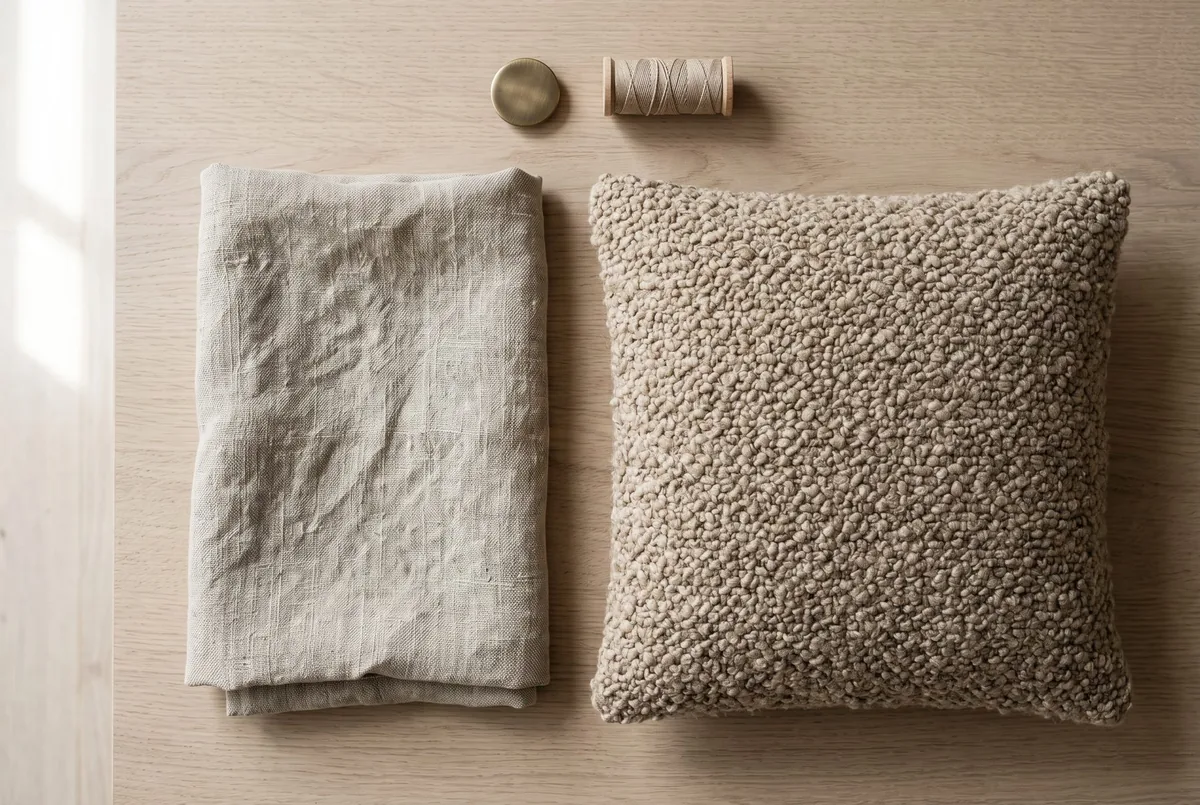
Samples of oak, ash, brass, travertine and linen laid out together.
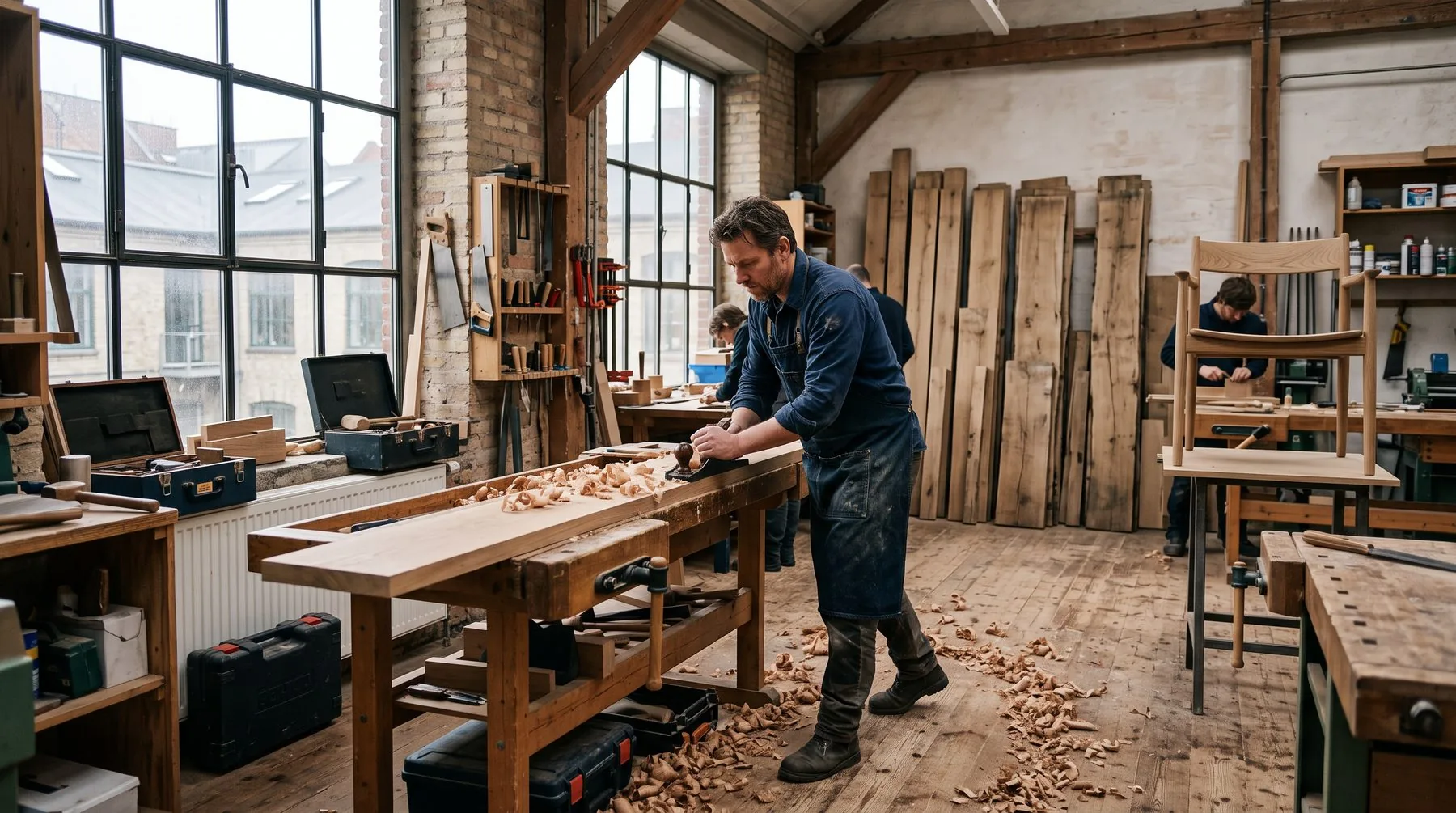
The Ledger shelving looks simple, and most of the work is hidden. One bay is two uprights and four shelves, and every part must stay flat to within 1 mm over 80 cm.
We start with kiln-dried oak at 8 percent moisture. Wood at that level stays flat in a heated Danish home. The planks rest in the workshop for a week before cutting so they match its air.
Each shelf is glued from three boards and planed to 28 mm. We turn the boards so their growth rings face alternate ways. Any warp in one board is then cancelled by its neighbour.
The uprights get a row of holes every 3 cm, drilled with a steel jig. The jig has to be exact. A hole that is out by 1 mm makes a shelf lean.
Each shelf sits on four oak pegs. We tested a shelf with 30 kg of books for four weeks and measured how far it sagged. The middle dropped by less than 1 mm.
The bays arrive in three parts. Fix the top of the unit to the wall with the brackets supplied. Then fill the shelves from the bottom up, with the heaviest books on the lowest shelf. If you want more shelves, ask us about extra shelves and pegs.